
Have you ever seen kiteboards (kitesurfers) or yachts sailing against the wind on a sea or lake and wondered how it’s possible?
Normally, you would think that being blown by the wind would simply push you downwind. However, in wind sports that harness the power of nature, the wind itself is transformed into a powerful propulsive force to move forward.
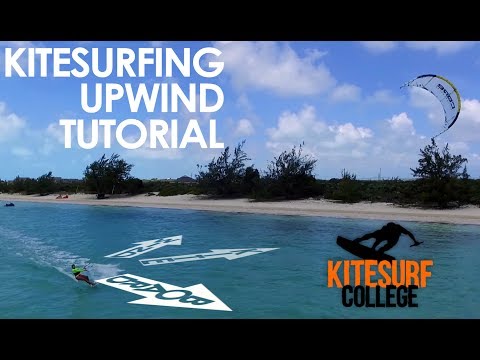
In this article, focusing on kiteboarding, which boasts overwhelming jumping ability and speed, we will clearly explain the mechanism of sailing against the wind, while also touching on the differences with yachts and windsurfing.
Furthermore, we will introduce the “foil” (hydrofoil) technology—where the board lifts off the water’s surface—that brought about the fastest Olympic sport in Paris, and the currently booming Wing foiling that evolved from it.
1. The Two Absolute Conditions for Sailing Upwind: “Lift” and “Drag”
The mechanism of sailing against the wind (upwind) is by no means magic. You cannot sail dead into the wind (at a 0-degree angle), but you can sail at an angle of around 45 degrees. To achieve this, the following “two forces” are essential.
1. The Engine in the Sky: “Lift” Generated by Sails and Kites
A yacht’s sail or a kite in the sky is not just a bag catching the wind. When filled with wind, it takes on a curved shape (airfoil) just like an airplane wing. As the wind splits and flows over the front and back of this wing, a pressure difference is created, generating a suction force directed diagonally forward called “lift.” This becomes a powerful engine to move forward.
2. The Brake in the Sea: “Drag” (Stopper) to Prevent Leeway
However, being pulled diagonally forward in the air alone will only cause you to slide downwind helplessly like slipping on ice (this is called leeway). To sail against the wind, you need a “stopper” in the water to firmly prevent this lateral slipping.
The “pulling force” in the air and the “force preventing lateral movement” in the water—when these two vectors collide, propulsion is generated in the direction where the force escapes, which is “diagonally forward.” It’s like a watermelon seed shooting forward when squeezed between your fingers.
By gaining this forward-diagonal force and repeatedly changing direction through a maneuver called “tacking” to draw a zigzag path, you can ultimately reach your destination upwind.
2. How Does a Kiteboard Move? The Main Role Belongs to the “Edge”!
For yachts, a large plate on the bottom of the hull called a “keel” acts as a stopper to prevent leeway. In windsurfing, a long fin (daggerboard) under the board plays this role.
So, what about kiteboarding?
A typical kiteboard (a snowboard-like board called a twin-tip) only has small fins a few centimeters long. In fact, fins are not the main players for sailing upwind in kiteboarding. Because the board is ridden tilted, the fins become nearly horizontal to the water’s surface, acting merely as drag rather than generating lift.
The kite’s greatest stopper (replacing the keel) is the “board’s rail (edge).”
Against the intense pulling force transmitted from the kite above, the kiteboarder leans their body heavily backward. Then, shifting their weight to their heels, they carve the windward rail of the board deeply into the water like a blade (edging).
In other words, by making the rider’s weight and the entire side of the board function as a “giant keel,” they can aggressively point upwind at a sharp angle without yielding to the power of the kite.
3. The Fastest Sport That Thrilled the World at the Olympics: “Formula Kite”
By combining this “upwind sailing technique” with airplane-wing-like “hydrofoils,” an extreme level of speed was achieved. This is “Formula Kite,” a sailing discipline newly adopted at the Paris Olympics (windsurfing has also evolved into the “iQFOiL class” by incorporating hydrofoils).
Athletes competing in the Olympic races do not ride twin-tip boards; instead, they glide while riding on underwater hydrofoils.
What is important here is that the foil does not merely act as a keel to prevent leeway. The submerged foil itself generates “underwater lift” just like an airplane wing. By producing a lift that naturally tries to point upwind to counteract the pulling force of the kite in the air, it becomes possible to sail upwind at an extremely sharp angle.
Furthermore, because the board lifts completely off the water’s surface, frictional drag drops to almost zero, resulting in extraordinary speeds that are three to four times the wind speed.
The top speed reaches 40 knots (about 75-80 km/h), and it was actually highlighted by the official Paris Olympics website and World Sailing as the “fastest sport across all events at the Summer Olympics.”
Due to the lack of water resistance, they carve upwind at sharp angles and otherworldly speeds unimaginable with traditional yachts or surfboards. This highly spectacular race, truly deserving the title “F1 on water,” has significantly rewritten the history of sailing.
4. The Latest Trend Born from Foil Technology: “Wing foiling”
Born from the evolution of this foil technology, the latest marine sport currently experiencing explosive growth in participants across seas and lakes is the “Wing foiling.”
Unlike kites, it does not have long lines stretching dozens of meters; instead, the rider directly holds a “wing” with their hands to control the wind.
At their feet, similar to Formula Kite, there is a hydrofoil. Because the board lifts off the water’s surface, significantly reducing frictional drag, the rider can utilize the foil’s own lift to efficiently sail upwind even in light winds.
Since there is no need to lay out long lines, it can be safely prepared even in lakes or beaches with limited space. Additionally, its accessibility and high safety—such as the ease of sitting on the board and paddling back if the wind drops—have quickly made it a massive trend in the freeride market.
Conclusion
The ability of wind sports to sail upwind is by no means magic; it is the gift of fluid dynamics woven by “wings in the air (lift)” and “resistance or wings in the water (edges, keels, and foils).”
Kiteboarding, in particular, is full of dynamic appeal where the rider absorbs the wind’s power with their entire body and slices through the ocean with just the edge underfoot. Furthermore, with the advent of the hydrofoil, wind sports have entered a new dimension, moving from “gliding on the water’s surface” to “flying with the board detached from the water.”
The next time you see them sailing against the wind at the beach, try observing them and think, “Ah, they are tacking by balancing the forces in the air and the water right now.” It will surely change your perspective on marine sports, adding a completely different layer of fascination.