
“…but you guys are actually taking stuff from other sports. Like recently, I think probably one of the ones we’ve seen recently is the osmosis Back Mobe 5 from Maxime, from Coccoluto. You know, they’ve seen that from the wakeboarding, like the days of Shaun Murray, where the osmosis came in. Taking that information from a different sport evolved it, tried it and created a new move.”
The Dawn of Wakestyle in Maui
At the 2018 GKA Kite World Tour Brazil event, the commentary booth erupted with excitement when a new trick, the “Back Mobe 5 Osmosis,” a further evolution of a wakeboarding trick, was landed. This trick, born from Gianmaria Coccoluto and Maxime Chabloz studying wakeboarding videos every night and pushing each other, eloquently speaks to the history of kitesurfing evolving through “technological importation” and respect for other sports.
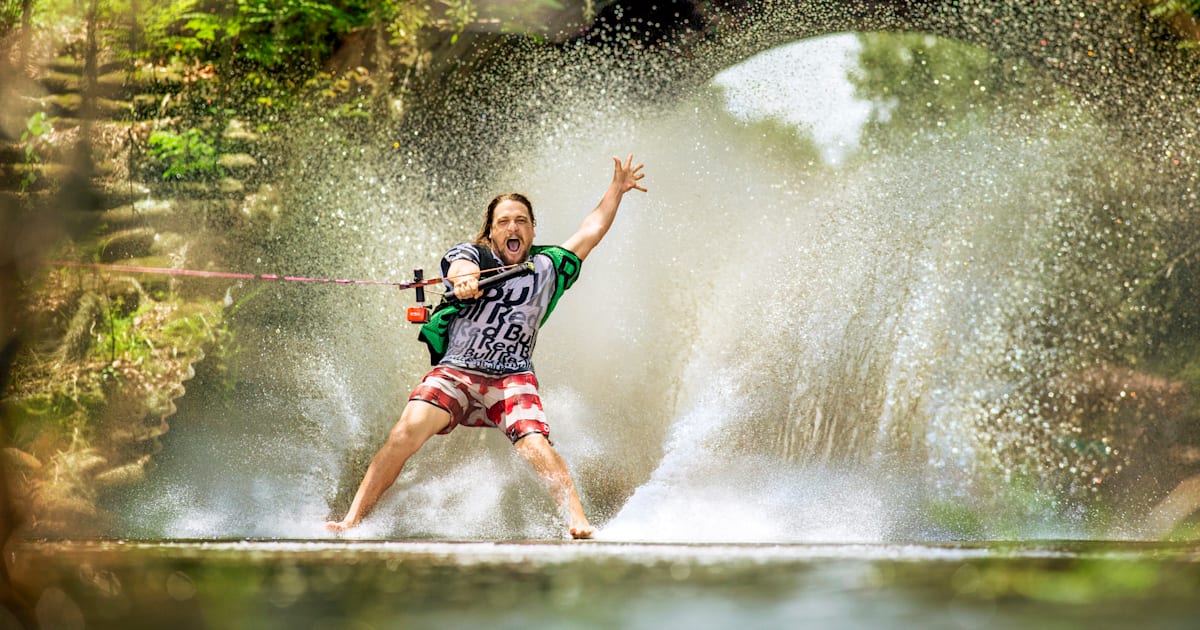
Tracing the origins of this DNA of “studying other sports’ videos to create new styles” leads to Maui, Hawaii, in the late 1990s and early 2000s. While kiteboarders of the time primarily focused on wave riding with directional boards and big air using the wind’s power, pioneers like Lou Wainman and Elliot Leboe began exploring a completely different approach.
They mounted wakeboard bindings (boots) on twin-tip boards and started riding “unhooked,” taking the kite’s power directly in their arms. This marked the dawn of “wakestyle,” which would later become the foundation of competitive freestyle. At the time, they too watched wakeboarding videos until the tapes wore out, importing innovative tricks into kitesurfing one after another.
The Trick Blueprints Left by the Bonifay Brothers
In the evolution of wakestyle, it was the legendary wakeboarders Parks Bonifay and his younger brother Shane Bonifay who provided kitesurfing with the most inspiration and trick “blueprints.”
Parks, known for water skiing at six months old and becoming an X Games champion at 14, is a rare innovator who pushed the limits of aerial tricks. His brother Shane also led the scene with his unique, skateboard-like style. Video productions featuring them, such as “Pointless,” served as bibles for kiteboarders of that era.
Many of the key tricks still used in kitesurfing today were invented by them. For example, Parks—who expanded the concept of aerials in wakeboarding by inventing the “911” and “Vulcan” and landing the world’s first “1080”—is the creator of the “Blind Judge” (a backside 180 in the air from a Railey position). On the other hand, Shane developed highly advanced invert (flip) tricks, such as the “Dum Dum” (a toeside front roll with a backside 360) and the “Tootsie Roll” (with a backside 180).
Playfulness Hidden in Trick Names
Beyond the Bonifay brothers’ inventions, the trick names imported from wakeboarding and firmly established in kitesurfing reflect the playful spirit and culture of the streets.
The “Dum Dum” and “Tootsie Roll,” invented by 13-year-old Shane, were named after his favorite American candies. Furthermore, the “Pete Rose” (a toeside Backroll with a frontside 360), invented by Scott Byerly, was named because the aerial diving posture resembled the signature “headfirst slide” of the legendary Major League Baseball player Pete Rose.
There are other unique names, such as the “Slim Chance,” named for its extreme difficulty, and the “KGB” (a heelside Backroll with a backside 360). Kiteboarders inherited these names without renaming them, showing respect to the pioneers.
Inheritance from Freestyle to Park Style
The concepts of aerials and handle passes pioneered by the Bonifay brothers and others were refined to the limit by the next generation of professional kiteboarders, such as Aaron Hadlow, sparking an explosive “technical freestyle” boom from the late 2000s.
As time progressed, video productions like the “Free Ride Project” served as catalysts, giving birth to “park style,” where riders hit artificial obstacles like kickers (jumps) and sliders, just like pure wakeboarding. In competitions like the Kite Park League, the wakeboarding-derived value of “how much style you can put into landing a trick” remains the core of the sport.
Today, the enthusiasm in kitesurfing is returning to big air, but at the root of technical board control, the DNA drawn on the lakes by the Bonifay brothers and brought to the ocean by the Maui pioneers is still deeply inherited.